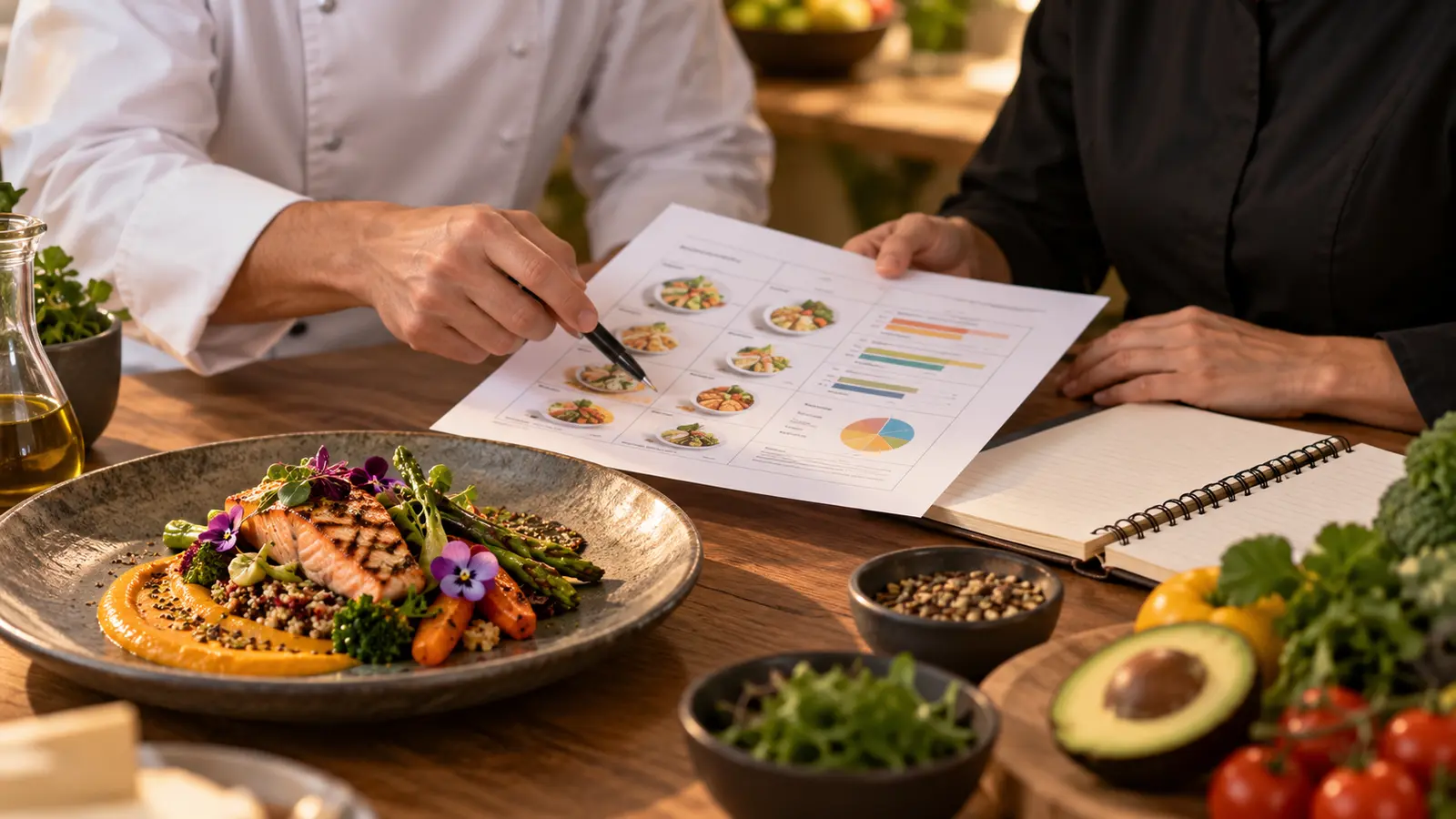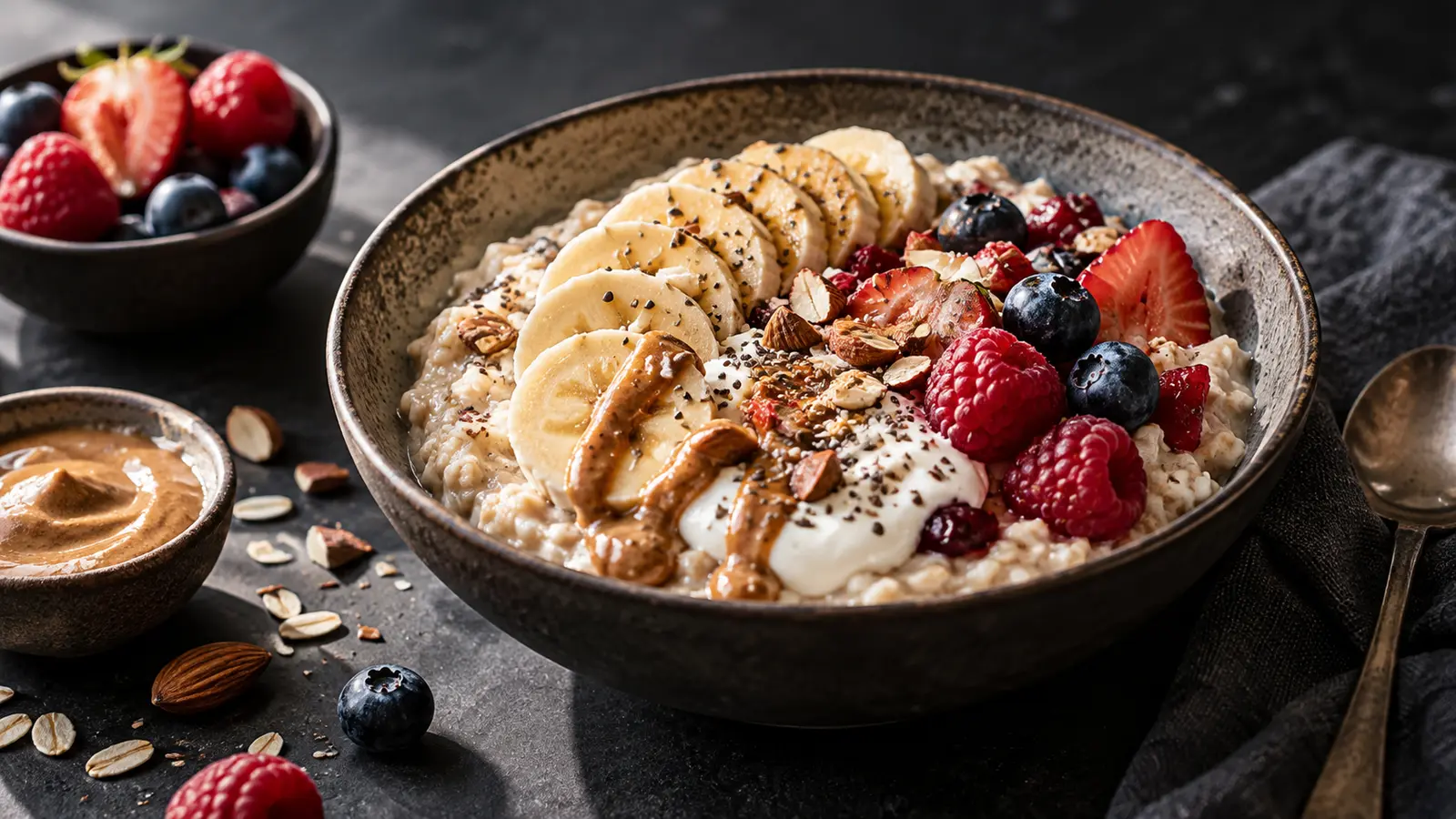
The athlete's week changes and the dish must too. Periodizing cooking means adjusting energy, quantities and schedules to the load, maintaining a coherent gastronomic experience.
High load days
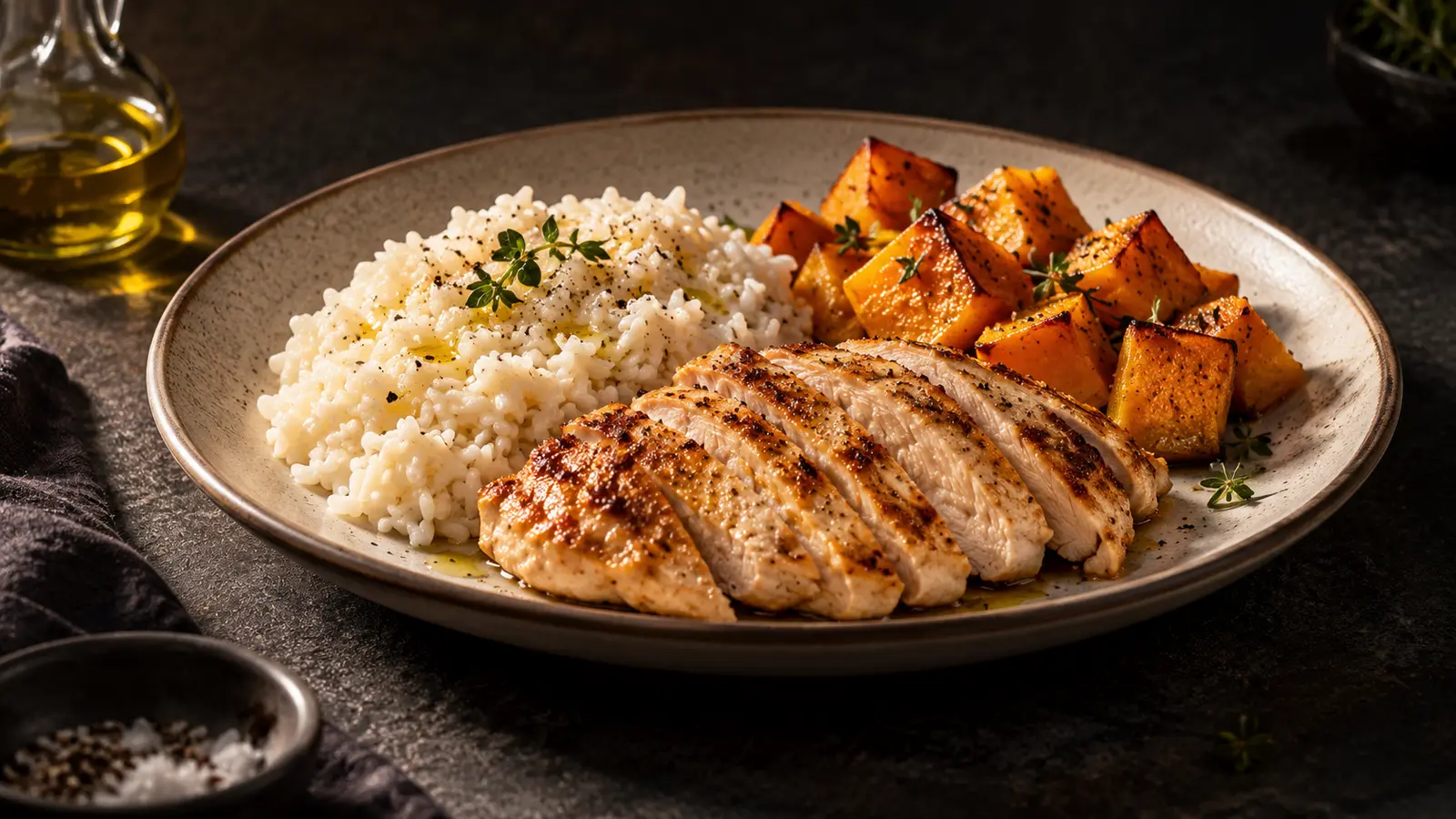
Carbohydrates tend to gain presence around demanding sessions. In cooking it translates into rice, pasta, potatoes, bread or other bases sized according to the guideline, with accessible and digestive preparations.
Recovery or rest days
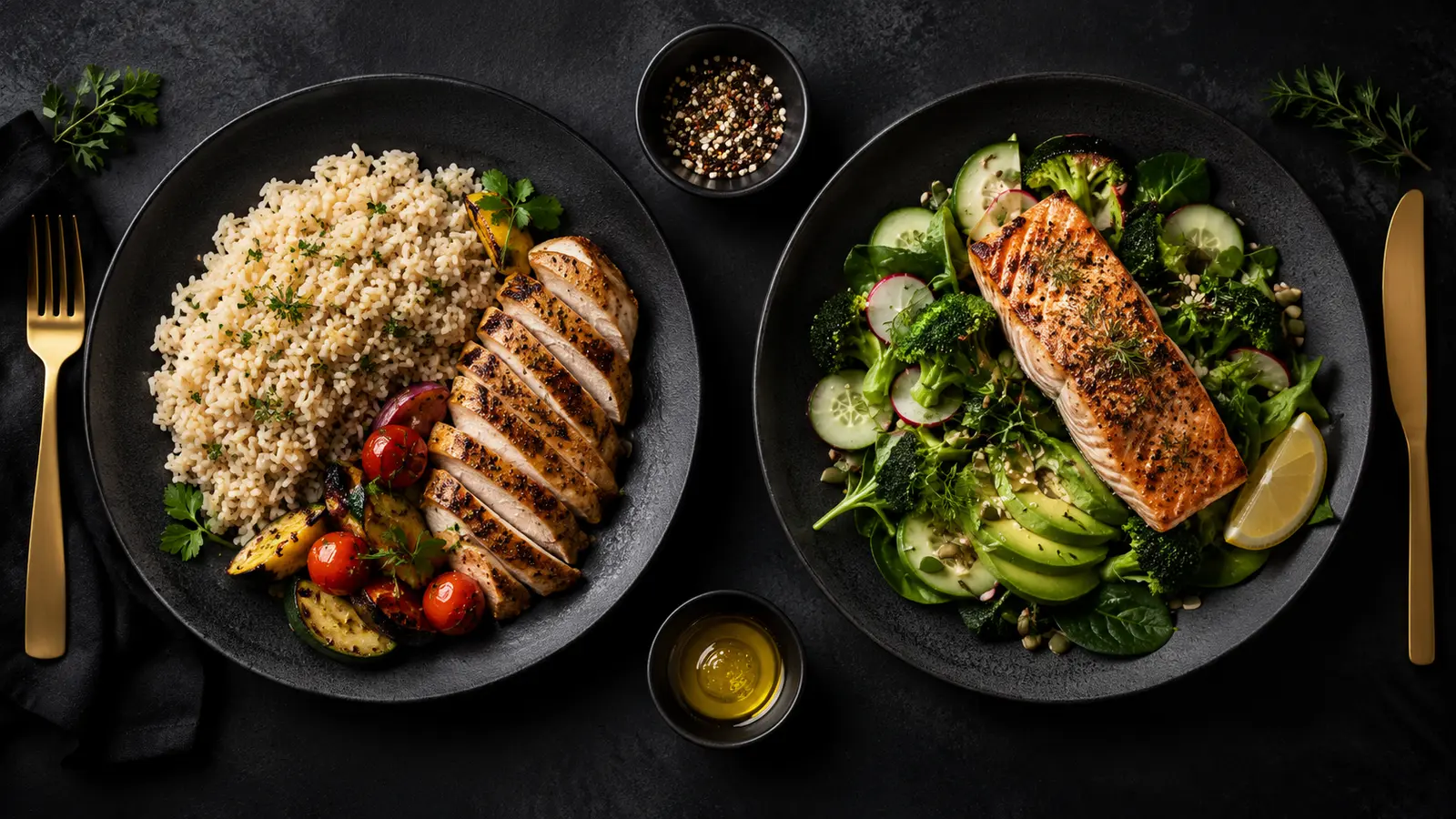
The overall quality is maintained, but the proportions and perhaps the volume change. Vegetables, proteins and fats can have more prominence, without applying automatic cuts or eliminating groups by intuition. The nutritionist individualizes.
A kitchen that adapts without confusing
Using the same family of recipes with variable portions and garnishes simplifies operations. A bowl can have more rice in high load and more vegetables cooked in rest, preserving flavor, identity and ease of execution.
PRACTICAL KEYS
To bring it to the kitchen
- Place the sports week next to the menu.
- Modify quantities and garnishes before reinventing the entire recipe book.
- Observe appetite, digestion and response to improve the following planning.
This content is educational and does not replace an individual assessment. The athlete's needs must be defined by a qualified nutrition or health professional.